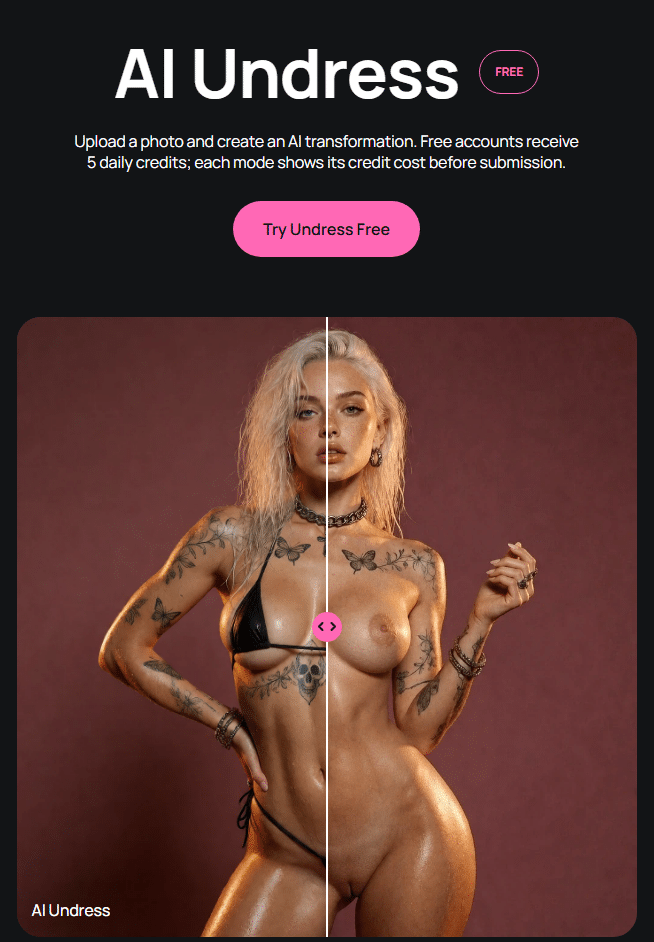
The most unusual part of undress porn is that nobody has to remove a single piece of clothing. A photograph can appear to show a different body or a different scene, even though the original moment never changed. The result belongs to a growing category of synthetic adult imagery, where software invents visual details rather than recording them. That distinction matters because a convincing picture can still be entirely fictional.
Undress Porn Changes the Picture, Not the Person
An AI undresser does not reveal anything hidden beneath fabric. It generates a possible replacement for visible pixels, drawing on patterns learned from large collections of images. Clothing, shadows, posture, and background details supply context, but the system has no access to the subject's actual anatomy.
Sites such as undress.guru bring image transformations, face swaps, and short video modes into a browser-based workspace. These features illustrate how different forms of synthetic adult imagery can share the same editing interface. A still picture, a swapped face, and an animated clip may look related, but none should be mistaken for documentary evidence.
This is why the phrase “clothes removal” is technically misleading. Nothing is peeled away to expose an original photograph underneath. Instead, the software creates a new visual interpretation while attempting to preserve enough familiar details to make the edit believable.
Why the Fake Looks Like a Real Photograph
Photographs carry countless subtle cues. Skin tone changes under different light, shadows follow the shape of objects, and camera grain helps separate a casual snapshot from a polished illustration. Generative systems imitate those cues, often more effectively than earlier cut-and-paste editing methods.
One common technique, image inpainting, replaces a selected region while using nearby pixels as context. More advanced generative models can also adapt textures, lighting, and edges across the revised image. Their apparent accuracy comes from visual consistency, not from discovering anything factual about a photographed person. That is the central trick of undress porn: a plausible surface, not a verified body.
Several details can make deepfake images appear persuasive:
- Consistent lighting helps newly generated areas fit the original scene.
- Familiar facial features keep the subject recognizable despite other changes.
- Background continuity reduces obvious signs of digital alteration.
- Natural-looking skin texture can hide the absence of genuine photographic detail.
Yet a coherent image is not necessarily a correct one. Fingers, body proportions, reflections, or overlapping edges may still contradict each other when examined closely.
The Psychology of a Scene That Never Took Place
The strange appeal of synthetic nudity in undress porn comes partly from the tension between recognition and invention. Viewers may recognize a face or a room, then unconsciously treat the invented parts as equally authentic. A small amount of genuine visual information can make the larger fabrication seem credible.
This effect is not limited to adult material. Similar problems appear in altered news photographs, fake celebrity endorsements, and fabricated social media posts. The human eye is good at recognizing familiar patterns, but it is not a reliable detector of how an image was produced.
A realistic edit also changes the meaning of the original photograph. A harmless portrait can be recast as an intimate scene without any corresponding event in real life. That gap between visual appearance and actual history is the central trick behind the supposed striptease.
Consent Determines Where the Line Is Drawn
The technology raises different questions when a real person can be identified. Creating or circulating intimate depictions without that person's permission can cause humiliation, harassment, and reputational damage, even when the image is fabricated. Adult status alone does not imply consent to sexualized editing. That distinction should remain central to any discussion of undress porn.
In the United States, the Federal Trade Commission explains how people can report intimate images shared without permission, including AI-generated deepfakes. Under the TAKE IT DOWN Act, covered services must provide a reporting process and remove qualifying images within 48 hours of a valid request. Rules elsewhere differ, so local law also matters.
Responsible use starts with clear permission from every identifiable adult depicted. Fully fictional adult characters are a different case from edits of someone else's photograph, but creators still need to consider misleading presentation and redistribution. An image can be technically artificial while the harm it causes is very real.
What Happens After the Illusion Becomes Ordinary
As generative editing becomes more accessible, the dividing line between a photograph and an invented scene will be harder to judge at a glance. Short video adds another layer: movement may strengthen the impression that the depicted event occurred, even when every altered frame is synthetic. For undress porn, motion can make a fabricated event even harder to question.
That shift makes labels, provenance information, and careful sharing practices more important. A visible AI label cannot prevent every misuse, and detection tools can miss convincing edits. Still, accurate context gives viewers a better chance of separating an imaginative production from a claim about a real person.
The defining feature of this technology is not an invisible striptease. It is the ability to manufacture a believable visual event from material that never documented it. The picture may be convincing; its story still needs proof.


The Ultimate Showdown: Free Porn vs Paid Porn – Which Offers Better Quality and Variety?


torikev: Anisyia Erotic gifs | Porn gifs | Oral porn gifs |…


Mature mom is shy to undress completely


Mature MILFs undress each other


The beauty is ready to completely undress


Babe is not shy about to undress


Naked Truth: A Holiday Striptease



Harvard Student’s Public Striptease and Gangbang Night